By Aadil Nathani
For climate action to be effective, those involved must feel a personal connection to the work they are doing, whether that be through cultural and religious ties, or reconnection with traditional ways of knowing. This is what Green Ummah’s Greening our Communities Toolkit set out to achieve. The Toolkit helps educators and students navigate sustainability through the lens of Islamic teachings and is applicable to Muslim youth in Canada today.
Yavar Mirza, a (then) Grade 11 student who participated in the Greening Our Communities Toolkit, noted that he “began to see the natural world not just as a resource for us, but something that is sacred.” Mirza continued, “[The Greening our Communities Toolkit] made me realize that climate change is not just a scientific issue. It’s a spiritual and moral responsibility that we all have together.”
This is a nuance that is often missing from mainstream sustainability education. In their comprehensive article on environmental education in multicultural contexts, Natasha Blanchet-Cohen and Rosemary C. Reily acknowledge that “both our understanding of the environmental issues and the proposed solutions are culturally limited to and by the perception of the dominant group.”1Therefore, a significant gap exists in access to culturally-competent resources and toolkits found in our academic institutions.
In the modern post-colonial world, our relationship with the environment is often defined by the dominant perspective of capitalism which reduces this relationship to a transactional one. We are taught to take from the environment without ascribing any rights to non-human species. When we are faced with environmental degradation, we find surface-level solutions only to continue depleting natural resources. This approach plays out every day in boardrooms, courtrooms, governments, religious institutions, and classrooms.
As a result of this one-dimensional capitalist mindset, we miss out on more holistic ways to think about our relationship with the environment, including perspectives rooted in Islamic tradition. There is a gap in environmental education for Muslims around the world, as connections are not made between the teachings from the Qur’an and the Sunnah to modern-day environmental issues. We also run the risk of excluding other perspectives, specifically from those who are disproportionately impacted by climate change, like Indigenous peoples. Here in North America, most Muslims are settlers on this land and have a responsibility to think critically about how we are participating in reconciliation work. Consequently, classrooms serve as an accelerator for shaping students’ perspectives, fostering a sense of justice, and nurturing environmental awareness, thereby laying the foundation for future leaders and generations to come.
Green Ummah has created culturally and religiously relevant environmental education materials to address these needs. The Greening Our Communities Toolkit, which launched in the 2021–22 school year, is a comprehensive, ready-to-teach curriculum package for high school teachers in Ontario. It is split into two sections: Islam & the Environment and Environmental Justice.
The Toolkit aims to give Muslim Canadian youth, BIPOC youth, and newcomers to Canada what they need to become environmental change makers. This primarily happens by integrating Muslim and Indigenous perspectives into their lives and fostering relationships with nature through outdoor learning. The Toolkit discusses the relationship between humankind and nature to assist students in building a deeper connection with the environment, outside of the transactional relationship espoused by the capitalist worldview. For example, we can consider the Seventh Generation Principle, a Haudosaunee concept that urges us to think about the impact of all our actions seven generations into the future. This is aligned with Islamic principles of the environment being an amanah (a sacred trust) from God that we must protect, and diametrically opposed to the capitalist worldview of the environment.
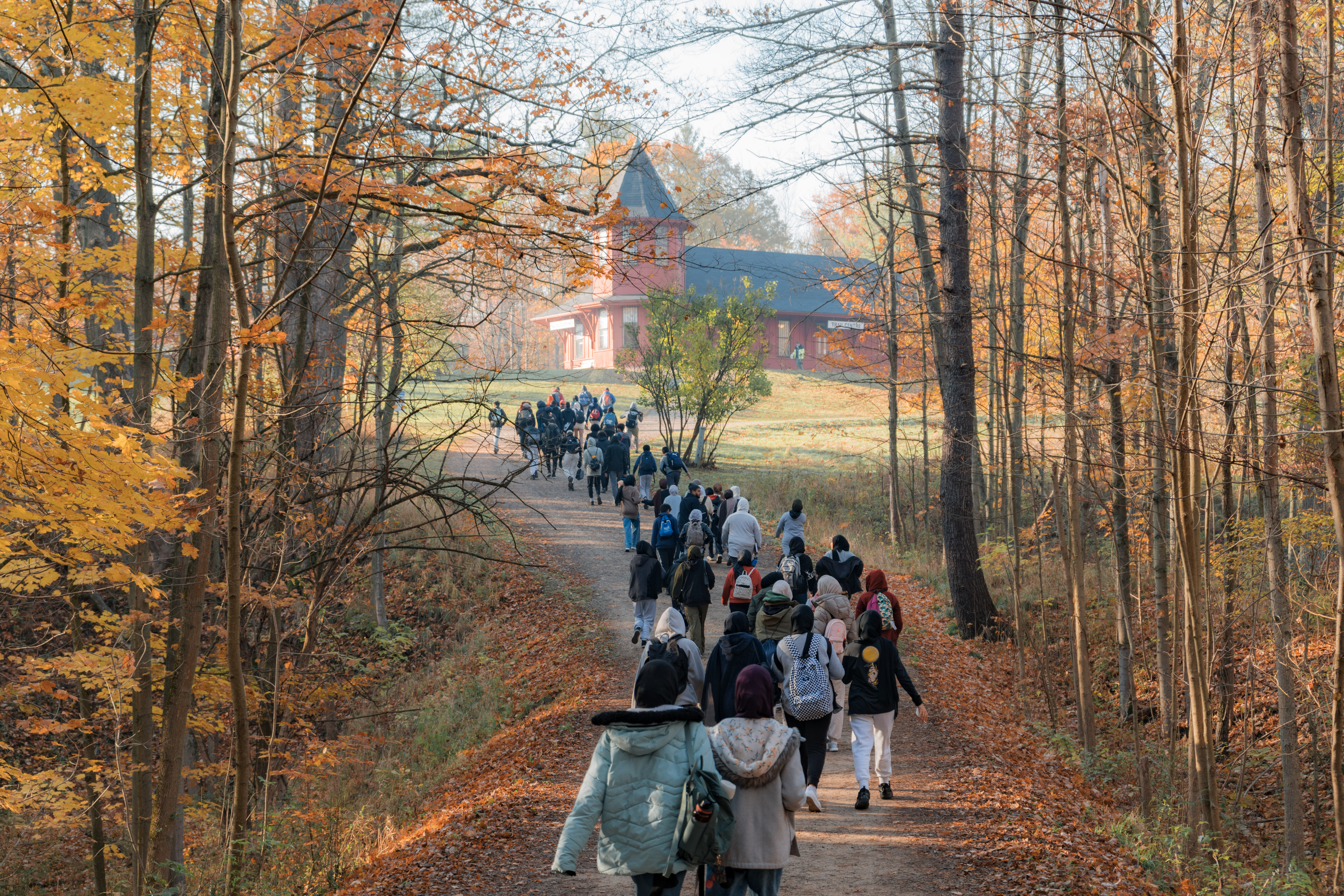
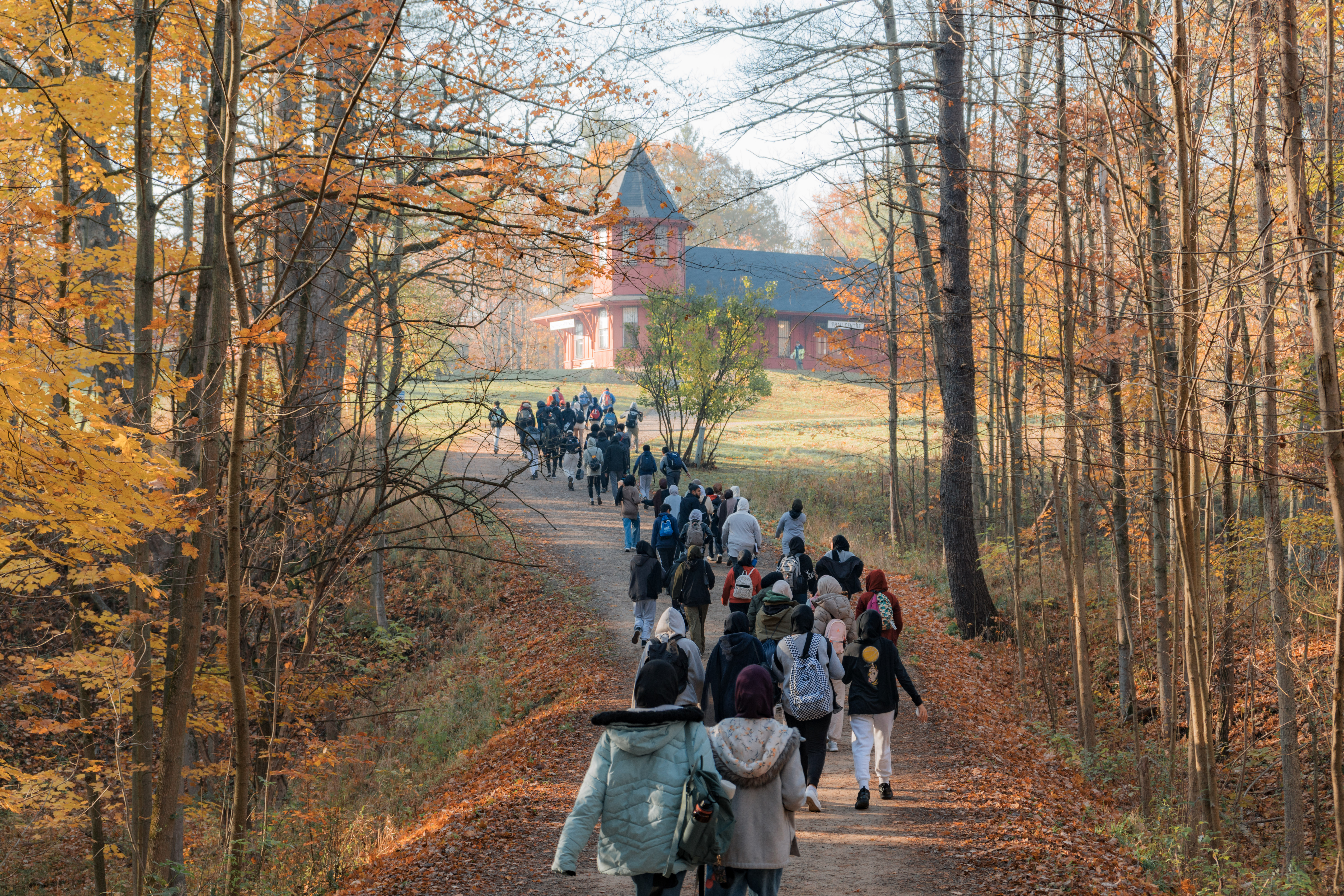
Through a partnership with Nature Canada, Toolkit students also attend a free field trip to National Wildlife Areas to help them apply the concepts explored in the classroom. In his work on culturally-responsive environmental education, Donald J. Burgess shares that opening classrooms to the outdoors allows teachers and students to build dynamic interconnected communities of learning.2 This highlights the importance of outdoor learning in allowing students to make personal connections with curriculum while fostering a sense of community in the classroom, which are key objectives of the Green Ummah Toolkit.. The field trip is an important addition to the Toolkit for another reason. As Ambika Tenneti and Jacqueline Scott found in their 2021 report Race and Nature in the City, racialized youth and newcomer Canadians often face barriers to accessing nature3 Allowing youth to attend for free creates opportunities for them to engage with nature that they otherwise may not have access to due to cost and transportation.
Overall, the results from the Toolkit have been overwhelmingly positive and indicate the growing need for similar programming to be implemented on a larger scale. Some of the results are highlighted below:
- 100% of students and teachers believe the Toolkit should be taught to other students;
- 93% of students are able to explain Islamic environmental ethics and draw connections between Islam and sustainability; and,
- 95% of students can define racism, structural racism and environmental racism in the Canadian and global context.
The data collected captures students’ and educators’ attitudes, behaviours, and beliefs in response to the Greening our Communities Toolkit.
The Toolkit has made an impact beyond discussion of environmental issues. Students at Windsor Islamic High School have advocated for stronger environmental policies within their school through letter writing campaigns, pressing the administration to improve their waste management systems. This is one example of how the Toolkit encourages and empowers students to actively be part of solutions and challenge those who have the power to make change, whether it be a local politician, a community leader, or their school administration.
To create a more inclusive and just environmental movement, it is essential for people to understand climate issues through a lens that they can connect with and one which provides the impetus for action. At Green Ummah, we therefore believe that it is vital for the Muslim ummah (community) to understand the divinely prescribed role of human beings as khalifas (trustees or stewards) of the planet. Student Yarva Mirza noted that he is now committed to upholding the principles that he learned such as “”khilafah, which is basically a stewardship, and amana, which is like a trust that we have to protect the earth.”
Simply by connecting youth to nature spaces and helping them understand their role as khalifas, we have inspired youth to act and they have exceeded our expectations by creating positive change in their local communities and homes. The Toolkit continues to fill a crucial need with many Muslim Canadian youth in Ontario, and its success should inspire similar programming across society to engage all our diverse communities.
- Blanchet-Cohen, N. and Reilly, R.C. (2013) Teachers’ perspectives on environmental education in multicultural contexts: Towards culturally-responsive environmental education, Teaching and Teacher Education. Available at: https://www.sciencedirect.com/science/article/abs/pii/S0742051X13001054
↩︎ - Burgess, D.J. (2019) Culturally Responsive Teaching that Bridges Indoor and Outdoor Settings. Available at: https://cedar.wwu.edu/secondaryed_facpubs/10/.
↩︎ - Scott, J.L. and Tenneti, A. (2021) Race and Nature in the City: Engaging Youth of Colour in Nature-Based Activities, Nature Canada. Available at: https://naturecanada.ca/wp-content/uploads/2021/04/Race-Nature-in-the-City-Report.pdf.
↩︎
References
- Blanchet-Cohen, N. and Reilly, R.C. (2013) Teachers’ perspectives on environmental education in multicultural contexts: Towards culturally-responsive environmental education, Teaching and Teacher Education. Available at: https://www.sciencedirect.com/science/article/abs/pii/S0742051X13001054.
- Burgess, D.J. (2019) Culturally Responsive Teaching that Bridges Indoor and Outdoor Settings. Available at: https://cedar.wwu.edu/secondaryed_facpubs/10/.
- Scott, J.L. and Tenneti, A. (2021) Race and Nature in the City: Engaging Youth of Colour in Nature-Based Activities, Nature Canada. Available at: https://naturecanada.ca/wp-content/uploads/2021/04/Race-Nature-in-the-City-Report.pdf.
Aadil is a lawyer in Toronto and is active with various non-profits and community organizing efforts. Aadil Nathani is the co-founder and a Board of Director of Green Ummah, a member of the Green Ummah Blog Editorial Team and he also sits on the Board of Directors for the Muslim Advisory Council of Canada.